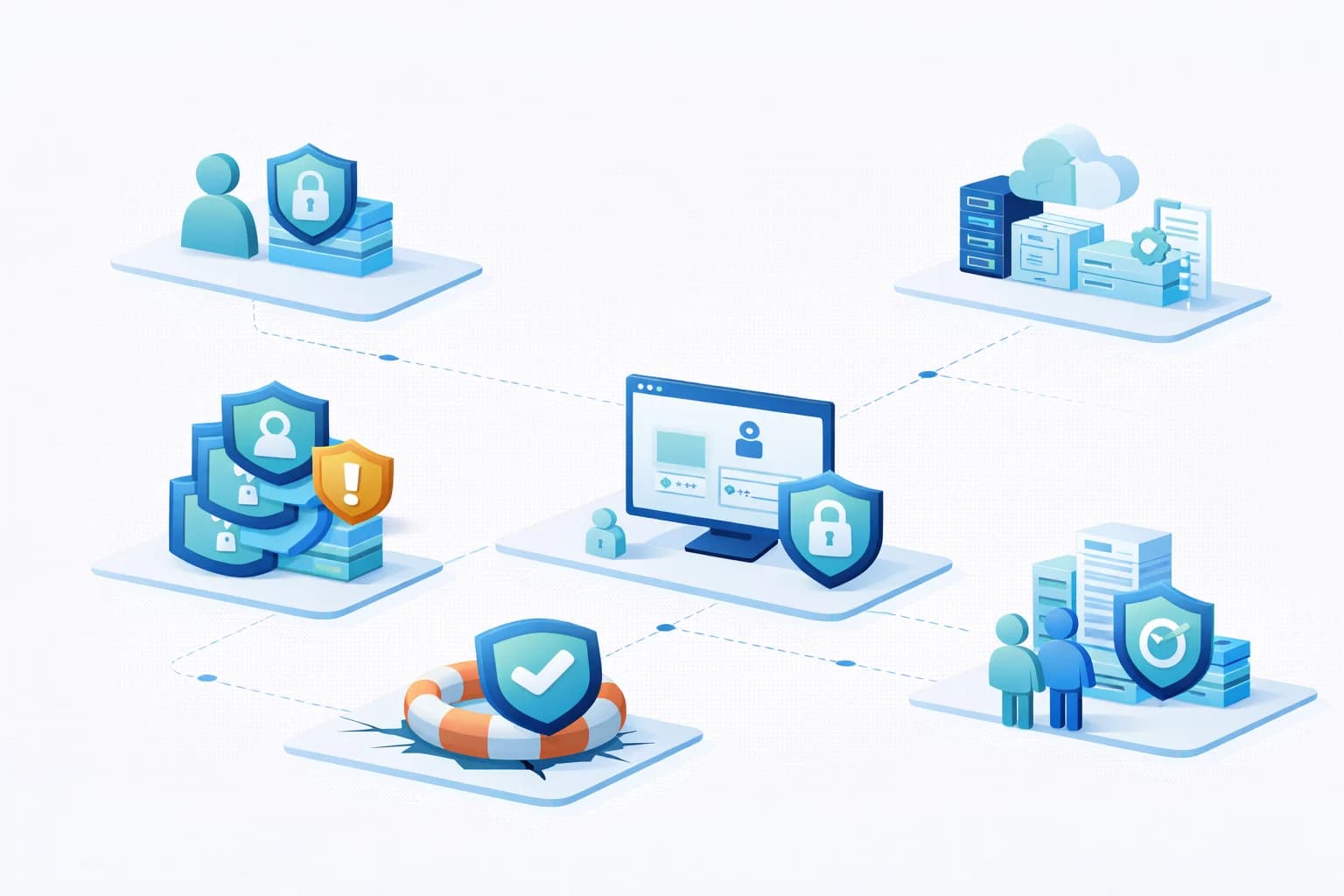
Identity Risk and Access Control Essentials
Modern cyber attacks rarely begin with direct attacks on infrastructure. Instead, attackers target user identities. By gaining access to legitimate accounts, they can move through systems without triggering traditional security controls.
For organisations using cloud platforms such as Microsoft 365, identity has effectively become the new security perimeter. If an attacker successfully compromises a user account, they may gain access to email, files, collaboration tools, and other business systems.
Managing identity risk therefore requires more than strong passwords. It requires structured access control policies, careful privilege management, and consistent authentication protections.
This guide explains why identity has become central to modern security strategies and outlines the essential controls organisations should implement to reduce identity-related risks.
Why Identity Is the New Security Perimeter
Traditional IT environments relied heavily on network security. Systems were protected by firewalls, and users typically accessed resources from within a trusted network.
However, modern organisations increasingly rely on cloud services and remote work. Users may access systems from multiple locations, devices, and networks.
In this environment, the identity of the user becomes the primary method of controlling access to systems and data.
If an attacker successfully compromises an account, they can often access services directly through legitimate login portals without needing to bypass network security controls.
This is why protecting identities has become one of the most important aspects of modern IT security.
Common Identity-Based Attack Methods
Understanding how attackers target identities helps organisations implement more effective protections.
Password-Based Attacks
Many attackers attempt automated login attempts using lists of commonly used passwords or credentials obtained from data breaches.
If users reuse passwords across multiple services, compromised credentials can be used to access organisational systems.
Phishing Attacks
Phishing remains one of the most effective ways to obtain login credentials.
Attackers send emails that appear to come from trusted sources, encouraging users to enter their login details on fraudulent websites.
Once credentials are captured, attackers may attempt to access the organisation's systems immediately.
Session Hijacking
In some cases, attackers attempt to steal active authentication sessions rather than passwords.
This allows them to bypass certain authentication mechanisms and access systems as if they were the legitimate user.
Privilege Escalation
Once an attacker gains access to a standard user account, they may attempt to obtain higher privileges.
If administrative permissions are poorly controlled, attackers may gain the ability to modify system settings, create additional accounts, or access sensitive data.
Core Identity Protection Measures
Reducing identity risk requires a combination of authentication controls, access governance, and monitoring.
Multi-Factor Authentication (MFA)
Multi-factor authentication is one of the most effective protections against identity compromise.
Instead of relying solely on a password, MFA requires an additional verification factor, such as:
- a mobile authentication app
- a hardware security key
- a one-time verification code
Even if an attacker obtains a user's password, they cannot access the account without the additional verification factor.
For this reason, MFA should be enforced across all user accounts, particularly those with administrative privileges.
Role-Based Access Control
Users should only have access to the systems and data necessary for their roles.
Role-based access control allows organisations to assign permissions based on job responsibilities rather than granting broad access to individuals.
Benefits include:
- reducing the impact of compromised accounts
- limiting exposure of sensitive data
- improving governance over system permissions
When roles change within the organisation, access permissions should be reviewed and adjusted accordingly.
Privileged Access Management
Administrative privileges present significant security risks if not carefully managed.
Best practices typically include:
- limiting the number of administrative accounts
- separating administrative accounts from normal user accounts
- requiring MFA for all privileged roles
- monitoring privileged activity
This approach ensures that high-level permissions are used only when necessary.
Conditional Access Policies
Conditional access policies allow organisations to control how and when users access systems.
Access decisions can be based on factors such as:
- user location
- device security status
- authentication method
- sign-in risk level
For example, an organisation may require additional verification when users sign in from unfamiliar locations or block access from high-risk regions.
Conditional access adds an additional layer of protection beyond simple authentication.
Regular Access Reviews
User access rights should be reviewed periodically to ensure permissions remain appropriate.
Over time, users may accumulate permissions that are no longer necessary due to role changes or system updates.
Regular reviews help ensure that access remains aligned with current responsibilities.
This reduces the potential impact if an account becomes compromised.
Monitoring Identity Activity
Even strong access controls cannot prevent every potential incident.
Monitoring identity-related activity allows organisations to detect suspicious behaviour early.
Examples of suspicious activity include:
- repeated failed login attempts
- sign-ins from unusual geographic locations
- login attempts from unfamiliar devices
- rapid changes in user permissions
Modern identity platforms provide logs and alerts that allow administrators to investigate these events quickly.
Early detection significantly reduces the potential impact of compromised accounts.
The Importance of Identity Governance
Identity governance ensures that access to systems and data is managed consistently across the organisation.
Effective governance includes:
- defined procedures for granting access
- approval processes for privileged roles
- documentation of access policies
- regular audits of permissions
These practices ensure that identity security remains manageable as organisations grow.
Common Identity Risks Found in Organisations
When organisations review identity configuration, several recurring issues are frequently identified.
Examples include:
- users without multi-factor authentication
- excessive administrative privileges
- shared accounts with no accountability
- outdated user accounts still active
- limited monitoring of authentication activity
Addressing these issues significantly reduces the risk of identity-based attacks.
Final Thoughts
Identity security has become one of the most critical elements of modern IT environments. As organisations rely increasingly on cloud platforms and remote access, protecting user accounts is essential for safeguarding systems and data.
By implementing strong authentication controls, managing privileges carefully, and monitoring identity activity, organisations can significantly reduce their exposure to common cyber threats.
A structured approach to identity governance ensures that access remains controlled, auditable, and aligned with organisational responsibilities.
Want to understand how secure your organisation's identity systems are?
A structured security review can help identify access risks and ensure that authentication controls are properly implemented across your environment.